Next Generation Wi-Fi
Solutions for Today’s High-Speed Wireless Applications
Wi-Fi is now ubiquitous with widespread adoption across all types of facilities – from offices, schools, universities and hospitals, to entertainment, hospitality and retail venues. With the growth of Wi-Fi has come significant developments in technology, advancing from 10 to 100 Mb/s to and now above 10 Gigabit speeds to support everything from mission critical business applications to IoT, online streaming, gaming etc.
In 2019, IEEE published the 802.11ax standard, known as Wi-Fi 6. This was followed in 2024 with the publication of IEEE 802.11be also known as Wi-Fi 7 enabling speeds up to 15Gb/s with the ability to theoretically deliver 30+Gb/s.
Industry standards recommend a minimum of Category 6A copper or OM3 multimode fiber for wireless access points (WAPs) as this is the only way to achieve greater than 5 Gb/s throughput. Most wireless access points (WAPs) today are also powered using power over Ethernet (PoE) technology, which is better supported with shielded twisted-pair cabling that offers superior heat dissipation and thermal stability.

Benchmark AV Brings Innovative Teaching and Learning to the University of Technology Sydney
Read more
High Performance Wi-Fi Cabling
Siemon Category 6A and higher copper cabling solutions are ideal for supporting today’s Wi-Fi applications, with our shielded Category 6A and higher systems providing superior support for PoE. Siemon fiber cabling is also ideal for long reach applications and deploying backbone speeds capable of supporting all generations of Wi-Fi uplink capacity.
- Full offering of indoor and outdoor Category 6A unshielded and shielded and 7A fully shielded cables that offer the highest performance margins across all critical transmission parameters.
- Siemon’s Category 6A and 7A shielded cables qualified to a higher operating temperature of 75°C (167°F) for better heat dissipation to support PoE used for powering WAPs.
- Wide range of multimode and singlemode fiber cables, cable assemblies, enclosures, jumpers, pigtails and field termination systems to support everything from backbone to extended distance connections for the latest Wi-Fi deployments.

Fast, Easy WAP Connections
Siemon offers a range of connectivity solutions for connecting WAPs – including field-terminate plugs for direct connections as well as outlets, faceplates and modular equipment cords for traditional deployments.
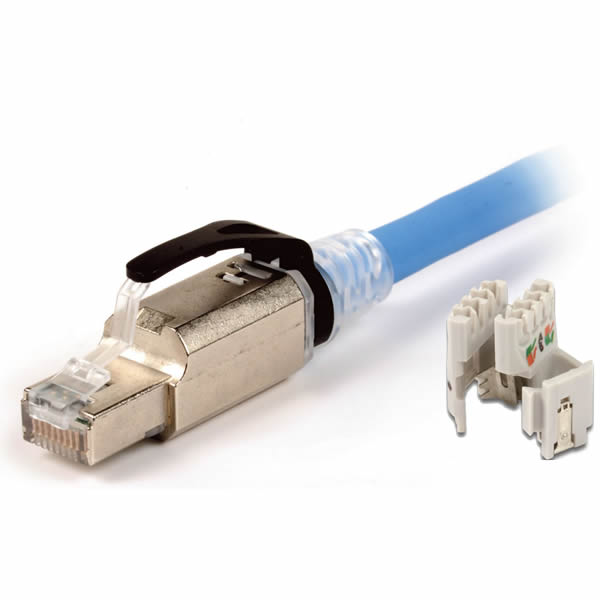
- Z-PLUG® field-terminated plug enables custom-length cables that can be terminated on site for quick, direct connections to WAPs, eliminating unsightly outlets and equipment cords. The low-profile plug with rounded edges and the ability to eliminate the boot and latch protector make it easy to fit into devices with limited space. Z-PLUG can terminate to shielded and UTP, solid and stranded cable in conductor sizes from 22 to 26 gauge all with a single part number, including Cat 5e, Cat 6, Cat 6A and Cat 7A.
- Siemon’s In-Line Connector offers quick, reliable high-performance field terminations for custom-length direct connections to wireless access points and any other IP-based and PoE-enabled devices deployed in today’s smart building networks. The In-Line Connector meets all Category 6A performance requirements, and it can be terminated to a wide range of solid and stranded cables for maximum flexibility. The In-Line Connector is compliant with UL 1863 and UL 2043 for use in plenum air handling spaces. Intended for indoor applications only unless sufficiently protected for the environment
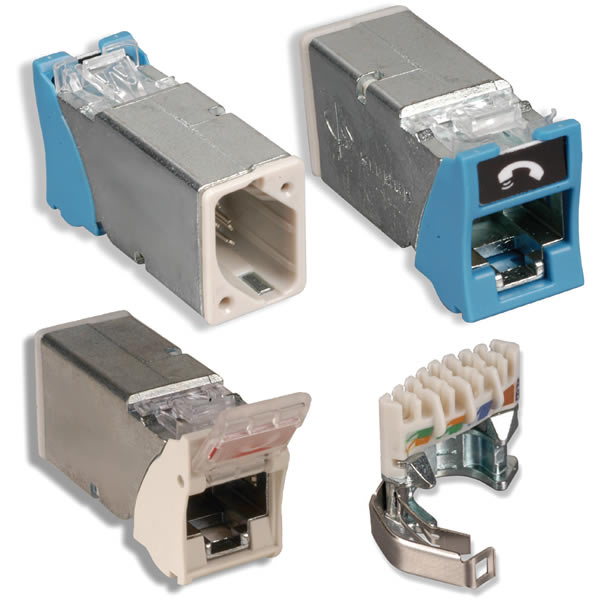
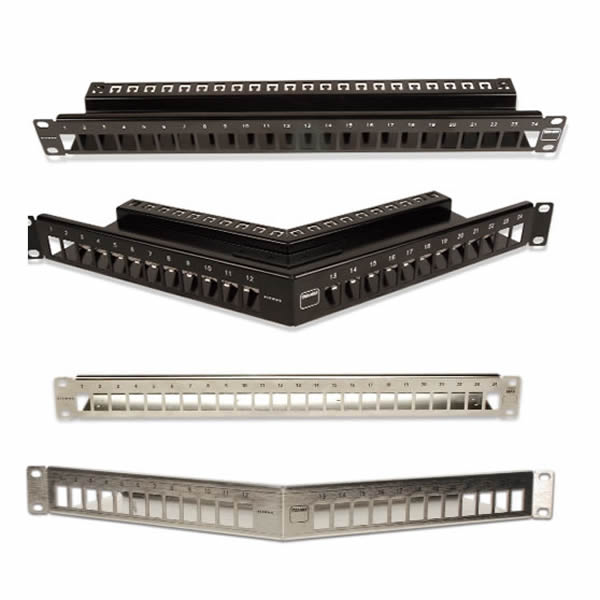
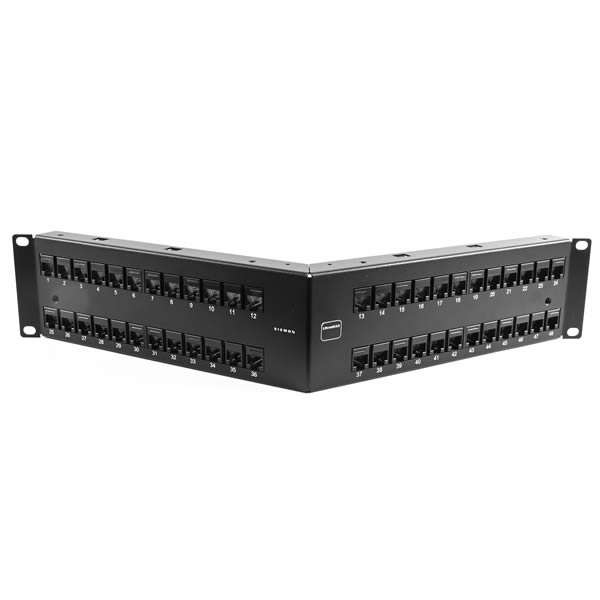
- Z-MAX® and UltraMAX outlets that can be mounted in a wide range of MAX faceplates, adapters, surface mount boxes and patch panels offer best-in-class performance via a patented IDC contact design and quick, easy termination.
Zone Cabling Deployments
Utilizing a grid-based zone cabling architecture to accommodate additional WAP deployments allows for rapid reconfiguration of coverage areas and provides redundant and future-proof connections. Siemon’s plenum-rated zone enclosures support intermediate fiber and copper connection points in the ceiling space, enabling shorter links from the zone enclosure to local WAPs. The use of zone enclosures also provides additional capacity to accommodate next-generation Wi-Fi technology that may require link aggregation and/or spare connection points to support the deployment of additional WAPs with minimal disruption.
- Cost-effective, plenum-rated 24-port MAX Zone Enclosure accepts up to 24 ports using UltraMAX Z-MAX® or TERA® outlets for Wi-Fi zone cabling deployments.
- Designed to install flush within a 2×2 ft. drop ceiling tile space, the plenum-rated Passive Ceiling Zone Enclosure accepts up to 96 ports for larger Wi-Fi zone cabling deployments, featuring an adjustable 4U rack system with a load capacity of 31.7 kg (70 lbs.).
Featured Products